
How 3D Printed Dentures Improve Fit and Comfort
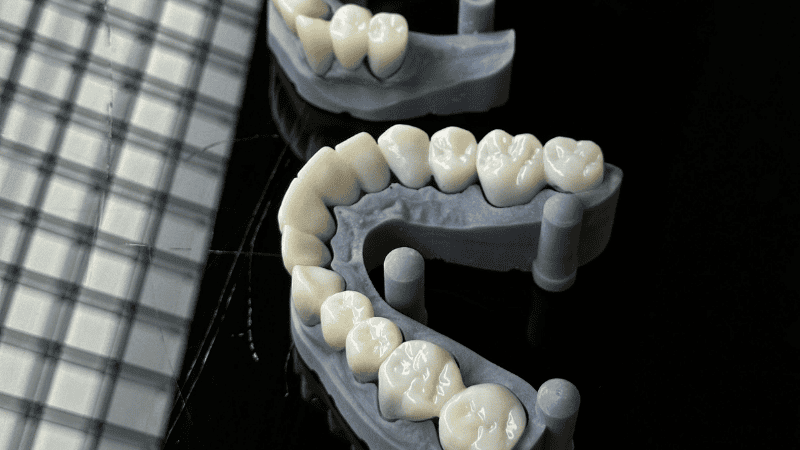
Getting dentures that actually fit well can feel like an impossible task. Many people struggle with loose dentures that slip around, cause sore spots, or make eating and talking difficult. Traditional dentures often require multiple adjustments and still might not feel quite right.
3D printed dentures use digital scanning and advanced printing technology to create dentures that fit your mouth precisely from the first day, which reduces slippage, sore spots, and the need for constant adjustments.
Unlike traditional methods that rely on physical impressions and manual molding, 3D printed dentures are created from highly accurate digital scans of your mouth. This means the dentures match the unique curves and contours of your gums exactly.
The shift to digital denture creation isn't just about better fit. 3D printing technology uses lightweight dental resins that feel more natural in your mouth. You'll also benefit from fewer dental appointments and faster production times.
The combination of precision fit and comfortable materials means you can get back to eating, speaking, and smiling with confidence much sooner than with traditional dentures.
Key Takeaways
- 3D printed dentures provide a precise custom fit using digital scans that match your mouth's exact shape
- These dentures require fewer appointments and adjustments compared to traditional denture methods
- Advanced lightweight materials make 3D printed dentures more comfortable and improve chewing and speaking ability
How 3D Printed Dentures Achieve Superior Fit
Digital technology transforms how dentures are made by capturing exact measurements of your mouth and turning them into a custom design. This process removes much of the guesswork that comes with traditional methods and creates dentures that match your unique oral structure.
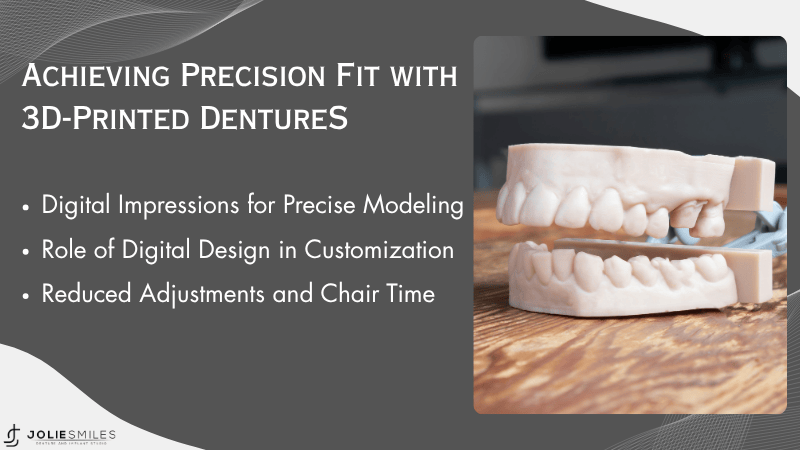
Digital Impressions for Precise Modeling
Traditional denture impressions use putty or paste that can be messy and uncomfortable. Digital impressions use an intraoral scanner to capture thousands of data points from your mouth in just minutes. The scanner creates a detailed 3D map of your gums, jaw, and remaining teeth.
This digital approach gives your dentist a more accurate picture of your mouth than old methods.
The digital scanning process removes human error that can happen when taking physical impressions. Your dentist can see the scan immediately and retake any areas that need better detail.
The data from your scan stays in digital form throughout the entire process. This means no distortion from pouring plaster molds or shipping impressions to a lab.
Role of Digital Design in Customization
Once your mouth is scanned, computer-aided design software lets your dentist create dentures that fit your exact anatomy.
The digital workflow allows precise adjustments to the shape, size, and position of each tooth. Your dentist can modify the design to match your facial features and bite pattern.
The software shows how your dentures will look before they're made. You can preview the final result and request changes to the appearance. Digital design technology helps create dentures that conform perfectly to your unique oral structure.
This customization level isn't possible with conventional denture making. The 3D printer builds your dentures layer by layer based on the digital design, which means what you see on screen is what you get.
Reduced Adjustments and Chair Time
Digital dentures typically need fewer appointments than traditional ones. The precise digital workflow means 3D printed dentures fit snugly from day one, reducing slippage and sore spots. You spend less time in the dental chair getting adjustments after your dentures are delivered.
Studies show that 3D-printed dentures have comparable or better retention than conventional ones. The improved fit means less rubbing against your gums and fewer pressure points that cause discomfort.
Most patients need only minor tweaks instead of major adjustments. This saves you time and reduces the break-in period where new dentures feel uncomfortable.
The Comfort Advantage of 3D Printed Dentures
3D printed dentures use advanced materials and precise digital designs to reduce common problems like sore spots and speaking difficulties. The technology creates prosthetics that fit better and feel more natural in your mouth.
Material Innovations for Comfort
The dental resin used in 3D printed dentures offers better biocompatibility than older materials. These newer resins are designed to work well with your mouth's natural tissues. They cause less irritation and allergic reactions.
Modern denture base resin has improved mechanical properties that make it stronger and more flexible. The material can withstand daily use while maintaining comfort. Impact strength is higher in these materials, so your dentures are less likely to crack or break.
The resins cure more completely during the 3D printing process. This means fewer chemicals remain in the finished product that could bother your gums. Your dentures will also be lighter than traditional ones, which reduces pressure on your gums throughout the day.
Minimizing Sore Spots and Irritation
Digital scanning captures the exact shape of your mouth down to tiny details. This precision means 3D printed dentures fit snugly from day one, reducing slippage and sore spots. You won't experience the rubbing and pressure points that come with poorly fitting prosthetics.
The smooth surface finish of printed dentures helps prevent irritation. There are no rough edges or uneven areas that traditional manufacturing sometimes creates. Your gums stay healthier because the denture distributes pressure evenly across your mouth.
Most patients need fewer adjustment appointments after getting their 3D printed dentures. The digital design process eliminates many of the fitting problems that require multiple visits to fix.
Enhanced Oral Function and Speech
3D printed dentures improve chewing efficiency and speech clarity because they fit your mouth more accurately. You can eat a wider variety of foods without worrying about your dentures shifting. The secure fit gives you more confidence when talking and eating in social situations.
Your bite alignment is more precise with digitally designed prosthetics. This means your jaw muscles work more naturally, reducing fatigue and headaches. The balanced occlusion helps you chew food more effectively.
Speech problems often happen when dentures don't fit properly. 3D printed dentures stay in place better, so you can speak clearly without worrying about clicking sounds or slipping. Your tongue has the right amount of space, which helps with pronunciation.
Step-By-Step Process: From Digital Scan to Final Denture
The journey from your first dental appointment to wearing your new dentures involves three main stages that work together to create a precise fit. Digital scanning captures detailed measurements of your mouth, 3D printing builds the denture using additive manufacturing, and post-processing refines the final product.
Digital Scanning and Design Stage
Your dentist starts by using an intraoral scanner to create a digital map of your mouth. This device captures thousands of images in just minutes, which is much faster than traditional impression methods.
The scanner records the exact shape of your gums, the roof of your mouth, and how your jaws come together.
The digital scan gets sent to specialized CAD software where a dental technician designs your dentures. They can adjust the tooth position, shape, and color on screen to match your facial features and preferences. This digital dentistry workflow lets you see a preview of what your dentures will look like before any physical work begins.
The software also checks for proper bite alignment and makes sure the denture base will sit comfortably on your gums. Your technician can make changes quickly without starting over, which saves time compared to traditional methods.
3D Printing and Additive Manufacturing Techniques
Once the design is approved, the digital file goes to a 3D printer that builds your dentures layer by layer. Most dental labs use stereolithography printers that cure liquid resin with UV or laser light. Each layer is only microns thick, which creates smooth surfaces and fine details.
The 3D printing process typically takes several hours depending on the printer type and denture complexity. DLP and LCD printers are common choices because they offer good precision and reasonable production speeds.
The printer builds the denture base and teeth together as one piece or separately, depending on the design approach.
Computer-aided manufacturing through 3D printing produces less waste than milling methods. The printer only uses the exact amount of material needed for your dentures.
Post-Processing and Polishing for Fit
After printing, your dentures need careful cleaning to remove any uncured resin from the surface. The technician washes them in special solutions and then cures them further under UV light to harden the material completely.
Polishing comes next to create a smooth, natural-looking finish. Your technician uses different grades of polishing compounds and tools to refine the surface texture. This step is important because it affects how comfortable the dentures feel against your gums and how natural they look.
The final stage involves checking the fit and making small adjustments if needed. Your dentist examines the dentures in your mouth and may use pressure-indicating paste to find any tight spots that need refinement.
Materials and Technology Behind 3D Printed Dentures
The materials used in 3D printed dentures directly affect how they fit in your mouth and how long they last. High-quality resin or composite materials create dentures that are both precise and comfortable, with specific properties that traditional materials can't always match.
Dental Resins and Advanced Composites
Your 3D printed dentures are made from specialized dental resins designed specifically for the unique environment of your mouth. Polymethyl methacrylate (PMMA) remains the most common denture base resin because it's proven, biocompatible, and creates natural-looking results.
Modern acrylic resins for 3D printing cure differently than traditional materials. They cure completely on the build plate during printing, which means you get better color stability and less warping.
Flexible removable partial denture resins represent a major advancement for people who need partial dentures. These materials bend slightly to fit around your existing teeth, making them more comfortable than rigid metal frameworks. The flexibility also makes them easier to insert and remove from your mouth.
Physical and Mechanical Properties of Materials
The physical properties of your denture material determine how well it holds up to daily use. Flexural strength measures how much your denture can bend before breaking when you bite down on food. Impact strength tells you how resistant the material is to cracking if you accidentally drop it.
Materials don't discolor and dentures exceed the benchmark standard with current 3D printing technology. This means your dentures will keep their natural appearance longer than older versions.
Translucency matters because it makes your dentures look more like real gum tissue. Natural gums let some light pass through them, and the best denture base resin mimics this quality.
When light interacts with your dentures the same way it does with natural tissue, people won't be able to tell you're wearing them.
Emerging Innovations: Nanoparticles and Blends
Scientists are adding nanoparticles like TiO2 (titanium dioxide) to denture base resin to improve its properties. These tiny particles can increase strength, improve color stability, and even provide antimicrobial benefits to keep your mouth healthier.
Material blends combine different types of dental resins to give you the best of both worlds. You might get the strength of one material mixed with the flexibility of another.
Achieving superior mechanics in 3D-printed denture resins remains a focus of ongoing research, even though biocompatibility and esthetics are already good.
These innovations mean your dentures can be customized to your specific needs. If you need extra durability, your dental lab can choose materials with enhanced impact strength. If natural appearance is your priority, they can select resins with better translucency.
Comparing 3D Printed Dentures with Traditional Dentures
The two methods differ significantly in how they fit your mouth, how quickly you can get them, and what you'll experience during the adjustment period.
3D printed dentures use digital scans and precision manufacturing while traditional dentures rely on manual impressions and hand-crafted techniques.
Fit and Retention Differences
Traditional dentures depend on physical impressions of your mouth that dental technicians use to hand-craft your tooth replacement. This process can introduce small errors during impression-taking or the manual fabrication steps.
3D printed dentures constructed from conventional impressions show improved retention compared to dentures made with intraoral scanning. The digital workflow creates a more precise fit to your gums and jaw structure.
3D printed options perform comparably or even better than conventional full dentures. The layer-by-layer printing process produces consistent results that match your digital scans exactly. Your dentures stay in place more securely during eating and speaking.
Comfort and Patient Experience
You'll likely notice differences in comfort between the two types of dentures. 3D printed versions often feel more comfortable because they fit your mouth's contours more accurately.
The digital design process allows your dentist to make adjustments before manufacturing begins. Traditional dentures might require multiple adjustment visits after you receive them to address sore spots or uncomfortable pressure points.
Patient satisfaction varies between studies, but many people report positive experiences with printed dentures.
Some patients mention concerns about aesthetics and how the dentures affect their speech. The fit quality directly impacts your daily comfort when wearing full dentures for eating and talking.
Production Time and Adjustment Needs
3D printing offers a faster turnaround for complete dentures compared to traditional methods. You'll need fewer appointments to get your final tooth replacement.
Traditional dentures typically require five to seven visits over several weeks. The process involves multiple impression appointments, try-in sessions, and fitting adjustments.
With 3D printed dentures, you might complete the process in as few as two appointments. The digital workflow eliminates several manual steps that slow down traditional fabrication.
Your dentist can send digital files directly to the printer instead of shipping physical molds to a lab. This means less waiting time between appointments and faster delivery of your finished dentures.
Cost and Longevity Considerations
3D printing proves more economical because the equipment and materials cost less than traditional denture-making tools. The technology uses less material waste during production.
Your upfront costs might be lower with printed dentures depending on your dental provider. Traditional dentures involve more labor-intensive steps that can increase the price.
Both types of dentures require eventual replacement as your mouth changes over time. Printed dentures perform comparably to conventional ones for short-term maintenance needs.
The long-term durability of 3D printed options continues to be studied as the technology improves. Your specific situation and oral health will determine which option gives you the best value over time.
Ideal Candidates and Treatment Options
3D printed dentures work well for patients who need complete tooth replacement, whether through traditional removable prosthetics or implant-supported solutions.
The technology adapts to different aesthetic preferences and allows for personalized gum coloring that matches your natural tissue.

Full Denture Solutions
Full denture solutions using 3D printing are ideal if you've lost all your teeth in one or both arches. The digital scanning process captures your oral anatomy with extreme precision, creating dentures that fit your gum contours exactly.
You're a good candidate for 3D printed full dentures if you want faster treatment than traditional methods offer.
The process typically requires fewer appointments than conventional denture fabrication. Studies show that 3D-printed complete dentures can reduce visits to as few as two appointments in some cases.
Patients who struggle with poorly fitting conventional dentures often benefit from switching to digital dentures.
The precise manufacturing process eliminates many common fit issues. If you have sensitive gums or have experienced discomfort with previous dentures, the improved accuracy of 3D printing can provide better comfort from your first fitting.
Implant-Supported 3D Printed Dentures
Implant-supported options combine dental implants with 3D printed prosthetics for enhanced stability. This approach works best if you have adequate bone density to support implants and want a more secure solution than removable dentures alone.
Your dentist places several dental implants into your jawbone to serve as anchors. The 3D printed denture then attaches to these implants, either permanently or with a removable connection.
This combination provides better chewing function and eliminates concerns about dentures slipping during eating or speaking.
You need healthy gums and sufficient bone structure to qualify for implant-supported digital dentures.
Your dentist will evaluate your oral health and may recommend bone grafting if needed. The implant-supported approach costs more upfront but offers long-term benefits in stability and bone preservation.
Customizing Aesthetics and Gum Shades
3D printing technology allows detailed customization of tooth shape, color, and gum appearance. You can work with your dentist to select denture teeth that match your facial features and desired look.
The gum-colored base material comes in multiple shades to blend naturally with your tissue. Your dentist can adjust the pink tones to match your natural gum color exactly.
This attention to detail helps reduce the stigma around removable prosthetics by creating more lifelike results.
You have options for tooth positioning and arrangement that suit your smile preferences. The digital design process lets you preview how your dentures will look before manufacturing begins. Changes are easier to make in the digital stage than after physical dentures are created.
Frequently Asked Questions
3D printed dentures use digital scanning for precision fitting and can be made in fewer appointments than traditional methods. The technology creates dentures that match your mouth's exact shape while using advanced materials designed for comfort.
What advantages do 3D printed dentures offer over traditional dentures?
3D printed dentures require fewer dental visits to complete the process. You can often get your dentures in just two appointments instead of the usual four or five.
The digital process is less invasive than traditional methods. You won't need messy impression molds that can trigger your gag reflex.
Digital impressions create a more comfortable experience for you. The precision of the design means you'll likely need fewer adjustments after getting your dentures.
How does 3D printing technology enhance the comfort of dentures for the wearer?
Digital scanning captures your mouth's anatomy with sub-millimeter accuracy. This means your dentures conform precisely to your unique gum contours and bone structure.
The custom fit reduces common problems like slippage and sore spots. You'll experience less irritation because the dentures match your mouth exactly.
Advanced lightweight resins make the dentures feel more natural in your mouth. These materials improve your chewing ability and help you speak more clearly.
Can 3D printed dentures provide a more accurate fit compared to conventional options?
Yes, 3D printed dentures offer a better fit than traditional dentures. Research shows that retention and comfort with 3D printed dentures were comparable or even superior to conventional dentures.
The digital design process eliminates human error in measurements. Your dentist creates a precise digital model of your mouth that guides the printing process.
Studies found that 3D printed dentures made from conventional impressions and digitized casts showed improved retention. The technology gives you dentures that stay in place better during daily activities.
What materials are used in 3D printed dentures, and how do they affect the final product?
Your 3D printed dentures are made from special dental resins designed for additive manufacturing. These materials are cured layer by layer using ultraviolet light, visible light, heat, or laser technology.
The resins used in 3D printing differ from the PMMA (polymethylmethacrylate) used in traditional dentures. Some dentists use improved versions like PMMA with nanosized titanium dioxide for better strength.
These materials affect how your dentures look and feel. The layering process can create smooth surfaces that feel comfortable against your gums.
Are there any specific care guidelines for maintaining 3D printed dentures?
You should clean your 3D printed dentures daily with a soft brush and denture cleaner. Avoid using regular toothpaste because it can scratch the surface.
Remove your dentures at night and soak them in water or denture solution. This keeps the material from drying out and helps maintain the fit.
Handle your dentures carefully over a soft towel or sink filled with water. Even though they're made with advanced materials, they can still break if dropped on a hard surface.
How long does it typically take to create a set of 3D printed dentures?
The 3D printing process is faster than traditional denture fabrication. You can expect to complete the entire process in fewer visits to your dentist.
Most patients receive their 3D printed dentures within two to three weeks. This includes the time for digital scanning, design, printing, and final adjustments.
The actual printing time is just part of the process. Your dentist still needs time to design your dentures digitally and verify the fit before finalizing them.