
Signs You May Need Full Mouth Reconstruction

If you deal with ongoing dental problems, you may wonder if simple fixes are enough. When you have several damaged, missing, or worn teeth, small repairs often fail to solve the bigger issue. You need a clear plan that restores how your whole mouth works.
You may need full mouth reconstruction if you have multiple missing or broken teeth, severe tooth wear, chronic jaw pain, or ongoing dental problems that affect how you chew and speak. These signs often point to deeper issues with your bite, jaw joints, or gum health.
When your teeth shift, your bite feels off, or old dental work keeps failing, your mouth sends a clear message. A full approach can rebuild strength, improve comfort, and protect your long-term oral health.
Key Takeaways
- Multiple serious dental issues often require a complete treatment plan.
- Bite problems, jaw pain, and worn teeth can signal deeper damage.
- Comprehensive care can restore function, comfort, and stability.
Recognizing Critical Signs You May Need Full Mouth Reconstruction
Certain dental problems affect more than one tooth or one area of your mouth. When you see patterns like tooth loss, worn teeth, jaw pain, or bite problems, you may need a broader solution such as full mouth reconstruction.
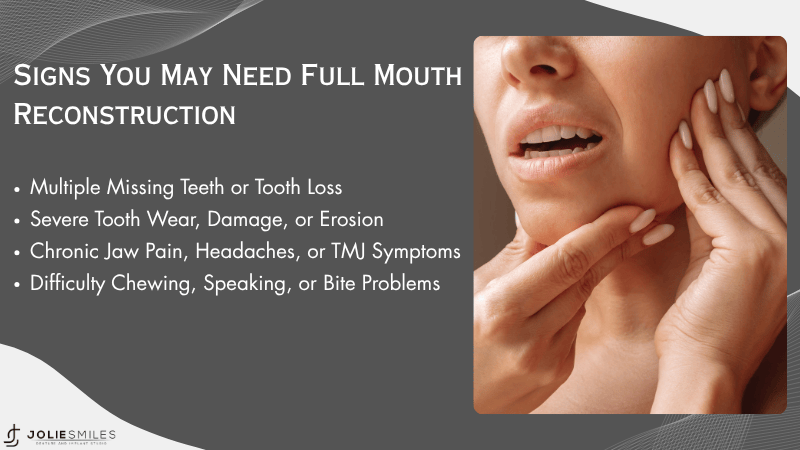
Multiple Missing Teeth or Tooth Loss
If you have multiple missing teeth, your mouth must work harder to chew and speak. Nearby teeth can shift into open spaces, which creates bite misalignment and uneven pressure.
Tooth loss also affects your jawbone. When a tooth is gone, the bone underneath can shrink over time. This change can alter how your upper and lower teeth meet.
You may notice:
- Food getting trapped in gaps
- Teeth drifting or tilting
- A feeling that your bite no longer fits together
A full mouth reconstruction treatment plan can replace missing teeth in a coordinated way. Instead of fixing one gap at a time, your dentist restores balance across your entire bite.
This approach often uses implants, bridges, or other restorations to rebuild support and improve long term function.
Severe Tooth Wear, Damage, or Erosion
Worn teeth can look flat, short, or chipped. Severe tooth wear may come from grinding, clenching, or acid erosion.
Acid erosion from diet or reflux weakens enamel. Once enamel thins, teeth break more easily and feel sensitive to hot or cold foods.
Damaged teeth across your mouth may signal a bigger issue. If you keep repairing individual teeth but new cracks form, your bite may be placing too much force on certain areas.
Common signs include:
- Flattened chewing surfaces
- Cracked or broken teeth
- Teeth that appear shorter than before
When wear affects many teeth, single crowns may not solve the problem. A phased full mouth reconstruction process rebuilds worn teeth together and restores proper height to your bite.
This can help prevent a collapsed bite, where your upper and lower jaws close more than they should.
Chronic Jaw Pain, Headaches, or TMJ Symptoms
Chronic jaw pain is not normal. If you feel pain near your jaw joints or hear clicking when you open your mouth, your temporomandibular joint (TMJ) may be under stress.
Bite issues often force your jaw muscles to overwork. This strain can lead to:
- Frequent headaches
- Facial soreness
- Neck or shoulder tension
You may wake up with jaw pain or feel tired in your face by the end of the day.
Ongoing TMJ symptoms often connect to bite imbalance. Full-mouth reconstruction can correct alignment and reduce pressure on your jaw joints, which may ease chronic discomfort.
Difficulty Chewing, Speaking, or Bite Problems
Chewing should feel smooth and even. If you avoid certain foods or chew on only one side, your bite may not function correctly.
Bite problems can show up as:
- Teeth that hit too early
- A feeling that your teeth do not fit together
- Slurred or unclear speech
You might also notice that meals take longer because chewing feels tiring. This can happen with damaged teeth, missing teeth, or a collapsed bite.
By correcting bite misalignment and rebuilding worn or missing teeth together, you create a stable foundation for comfortable chewing and clear speech.
Impact of Bite Alignment and Jaw Health on Oral Function
Your bite alignment and jaw health affect how you chew, speak, and hold your face at rest. When these systems shift, you may notice changes in your comfort, appearance, and daily function.
Bite Collapse and Changes in Facial Appearance
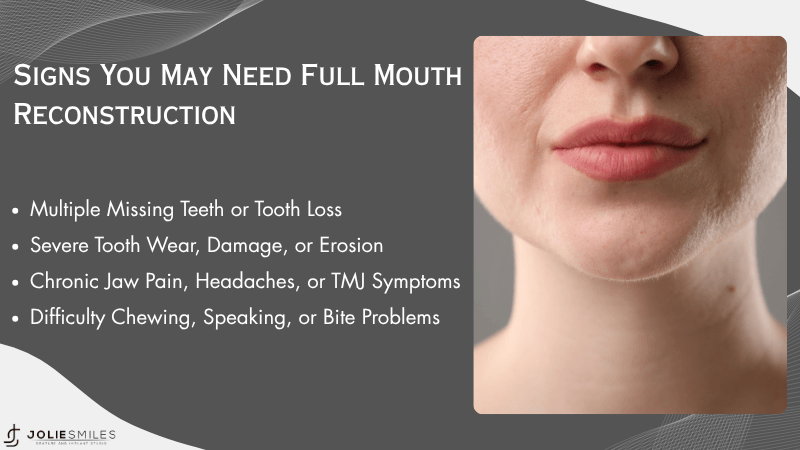
When teeth wear down, break, or go missing, your bite can shift over time. This process, often called bite collapse, reduces support between your upper and lower jaws.
As teeth lose height, your vertical dimension decreases. Your lower face may appear shorter. You might notice a sunken look, thinner lips, or deeper lines around your mouth.
These changes do not happen overnight. They develop slowly as chewing forces stay uneven and untreated damage adds up.
You may also feel that your teeth no longer meet evenly. Uneven contact can cause further wear, cracks, and loose restorations. In many cases, a full mouth restoration rebuilds lost tooth height and restores proper support so your face and bite work in balance again.
Muscle Tension, Facial Strain, and Vertical Dimension Issues
When your bite does not line up correctly, your jaw muscles must work harder to bring your teeth together. This extra effort can lead to muscle tension, jaw fatigue, and daily discomfort.
You may feel jaw pain, clicking, or tightness near your ears. Some people also notice headaches or soreness in the neck and shoulders due to ongoing jaw strain.
Loss of proper vertical dimension can make this worse. When your lower face collapses inward, muscles stay in a shortened or strained position. Over time, this can increase facial tension and limit smooth jaw movement.
A detailed exam helps identify whether your symptoms relate to bite imbalance. Treatment may include adjusting your bite or planning a full mouth restoration to restore stable tooth contact and reduce stress on your joints and muscles.
Recurring or Complex Dental Issues Indicating Comprehensive Care
When dental problems keep coming back, quick fixes often stop working. You may need a broader plan that looks at your entire mouth, not just one tooth at a time.
Deteriorating Restorations and Previous Dental Work
Old dental restorations do not last forever. Fillings can crack, crowns can loosen, and bridges can fail when the teeth under them weaken.
If you replace the same dental crowns, bridges, or veneers every few years, your mouth may lack proper support. Bite problems, grinding, or untreated decay can damage new work just like the old.
You might notice:
- Repeated crown repairs
- Margins that trap food
- Gum swelling around old restorations
- Shifting teeth near missing spaces
When several restorations break down at once, restorative dentistry may need to take a wider view. A dentist may suggest a customized treatment plan that replaces failing work while correcting the root cause, such as bite imbalance or missing teeth.
In some cases, treatment may include dental implants, new dentures, or upgraded crowns as part of a larger dental reconstruction. This approach aims to create a stable base so your new dental restoration lasts longer.
Combination of Multiple Oral Health Problems
You may face more than one issue at the same time. For example, you could have gum disease, worn teeth from grinding, and several missing teeth.
When these problems overlap, single treatments often fall short. Placing one implant or one crown will not fix an uneven bite or active periodontal disease.
Common patterns that point to full care include:
- Advanced gum disease with bone loss
- Several missing or severely worn teeth
- Chronic jaw pain linked to bite problems
- Repeated infections or root canal treatments
In these cases, you may benefit from a comprehensive treatment plan that stages care in the right order. Your dentist may combine periodontal therapy, orthodontic correction, and multiple dental restorations into one personalized treatment plan.
This type of full mouth rehabilitation focuses on restoring function first. A well-planned full-mouth restoration can rebuild chewing strength, stabilize your bite, and protect your remaining natural teeth.
Gum Disease, Bone Loss, and Supporting Structure Health
Your teeth rely on strong gums and solid bone for support. When gum disease or bone loss weakens that support, you may need more than simple dental repairs.
Progressive Gum Disease and Recession
Gum disease starts with red, swollen, or bleeding gums. In early stages, you can often reverse it with better home care and professional cleanings.
When it progresses to advanced gum disease, the infection spreads below the gumline. Bacteria damage the tissue and bone that hold your teeth in place. Untreated disease can lead to gum recession and tooth loss.
As your gums recede, teeth may look longer or feel loose. You might notice bad breath that does not go away. Deep pockets can form around teeth, trapping more bacteria.
At this stage, you often need active gum disease treatment, not just a routine cleaning. Periodontal therapy may include scaling and root planing, medicated rinses, or other targeted gum treatments to control infection and protect remaining structure.
Advanced Bone Loss and Need for Bone Grafting
When infection reaches the jawbone, bone loss can follow. The bone shrinks because inflammation destroys the tissue that supports your teeth.
Bone loss creates serious limits for future treatment. If you need dental implants, you must have enough healthy bone to hold them in place. Without it, implants may fail or not be possible at all.
In these cases, your dentist may recommend bone grafting. This procedure adds bone material to rebuild areas that have thinned or collapsed. Bone grafting can restore strength to your jaw and create a stable base for dental implants or other reconstruction work.
Benefits of Full Mouth Reconstruction for Long-term Oral Health
Full mouth reconstruction does more than change how your smile looks. It helps you chew, speak, and live without daily discomfort while protecting your long-term oral health.
Regaining Function, Comfort, and Confidence

When many teeth are worn, broken, or missing, simple treatments may not fix the problem. A full mouth dental restoration uses a mix of procedures to rebuild your smile and restore function and appearance at the same time.
You may receive crowns, bridges, implants, or other treatments based on your needs. These options help you:
- Chew food without pain
- Speak more clearly
- Keep your bite stable
- Reduce jaw strain
If your bite feels uneven or your jaw often aches, a detailed plan can correct alignment problems. This can lower stress on your teeth and joints.
As your comfort improves, your confidence often grows. You can smile, eat in public, and talk with others without worrying about pain or loose teeth.
Improved Oral Health and Prevention of Future Issues
Full mouth reconstruction also protects your oral health over time. Dentists often recommend it when damage or disease affects most or all teeth, and smaller fixes will not last. In these cases, full mouth reconstruction becomes necessary to restore proper function and prevent more harm.
Treatment often includes care for:
- Severe tooth decay
- Advanced gum disease
- Bite problems
- Long-term wear
By treating these issues together, you lower the risk of future infections, broken teeth, and bone loss. Healthy gums and a balanced bite support long-term oral health.
With regular checkups and good home care, your rebuilt smile can stay strong for many years.
What to Expect: The Full Mouth Reconstruction Process
You will move through clear steps that focus on diagnosis, planning, and staged treatment. Each step builds on the last so your dentist can restore function, comfort, and stability in a safe and organized way.
Comprehensive Evaluation and Diagnosis
You start with a comprehensive evaluation. Your dentist reviews your medical and dental history and asks about pain, chewing problems, and cosmetic concerns.
They examine your teeth, gums, jaw joints, and bite. X‑rays, digital scans, photos, and sometimes 3D imaging help measure bone levels, tooth damage, and alignment.
Your dentist also checks for gum disease, decay, worn enamel, and signs of grinding. If needed, they may refer you to a specialist for deeper gum or jaw joint testing.
This step gives you clear answers. It also helps you decide when to schedule a consultation for treatment.
Customized Treatment Planning and Multidisciplinary Care
After the exam, your dentist creates a customized treatment plan based on your goals, budget, and oral health needs.
This plan may include:
- Crowns or bridges
- Dental implants
- Gum therapy
- Orthodontics or orthodontic treatment to correct bite problems
- Extractions or bone grafts
Full mouth reconstruction often requires more than one provider. You may see a periodontist for gum care, an oral surgeon for implants, or an orthodontist to move teeth into better position.
Your dentist explains the order of procedures, healing time between visits, and total timeline. Some cases take a few months. More complex cases can take a year or longer. You review costs, sedation options, and payment plans before treatment begins.
Restorative Phase and Ongoing Maintenance
During the restorative phase, your dentist completes treatment in stages. You may receive temporary restorations while implants heal or while orthodontic treatment aligns your teeth.
Procedures often happen over several visits. Healing periods are planned between surgeries or major restorations.
Step‑by‑step guides to full-mouth reconstruction procedures explain how dentists move from extractions and implants to final crowns or bridges.
Once treatment ends, you shift to maintenance. You will:
- Attend regular cleanings and exams
- Wear night guards if you grind your teeth
- Follow daily brushing and flossing routines
Good home care and routine checkups protect your restorations and help them last as long as possible.
Frequently Asked Questions
Full mouth reconstruction treats serious dental problems that affect how you eat, speak, and live each day. It often involves rebuilding or restoring most or all of your teeth to improve function and comfort.
What are the common indicators that full mouth reconstruction might be necessary?
You may need full mouth reconstruction if you are missing several teeth in different areas of your mouth. Large gaps can cause nearby teeth to shift and change your bite.
Severe tooth wear, multiple broken teeth, or many failing crowns and fillings also raise concern. If dental problems affect both your upper and lower teeth, a full approach may work better than fixing one tooth at a time.
Ongoing pain when chewing or frequent dental infections are also warning signs. These issues often point to deeper structural problems.
How do you know if you’re a candidate for full mouth reconstruction?
You may be a candidate if you have a mix of problems such as missing teeth, gum disease, cracked teeth, and bite issues. When these issues appear across your whole mouth, your dentist may suggest a comprehensive plan.
A dentist will check your teeth, gums, jaw joints, and bite. X-rays and 3D scans help show bone loss, hidden decay, or joint damage.
What are the signs of severe tooth wear that could require a full mouth reconstruction?
Severe tooth wear often shows up as short, flat, or chipped teeth. You may notice increased tooth sensitivity to hot or cold foods.
You might also see small cracks along the edges of your teeth. In some cases, your bite feels different because your teeth no longer meet the way they should.
Long-term grinding or acid erosion can wear down enamel across many teeth. When this damage affects your whole bite, you may need more than a few crowns to restore function.
Can you explain the types of dental issues that full mouth reconstruction addresses?
Full mouth reconstruction treats advanced tooth loss, severe decay, gum disease, and damaged dental work. It can also address bite misalignment and jaw joint problems.
Dentists may use implants, crowns, bridges, or gum treatment as part of your plan. The goal is to rebuild strength, stability, and proper alignment.
If you have many failing restorations, replacing them one by one may not solve the bigger problem. A full-mouth approach can update and coordinate all your restorations at once, as explained in these signs you may need a full-mouth reconstruction.
What symptoms suggest you need to consider full mouth reconstruction?
You may struggle to chew certain foods or avoid eating on one side of your mouth. This often means your bite no longer works well.
Speech changes, frequent headaches, or facial soreness can also point to deeper dental issues. Some people notice changes in face shape due to tooth loss or severe wear.
If your daily comfort and confidence drop because of dental problems, you should not ignore it. Early evaluation can prevent more damage.
How does chronic jaw pain relate to the need for full mouth reconstruction?
Chronic jaw pain often connects to bite problems or uneven tooth wear. When your teeth do not fit together correctly, your jaw muscles work harder than they should.
You may feel pain near your ears, stiffness when opening your mouth, or frequent tension headaches. These signs can link to temporomandibular joint stress.
In some cases, rebuilding your bite through full mouth reconstruction helps improve alignment and reduce strain. A careful exam can show whether your jaw pain relates to larger structural issues.