
Implant Dentures in Odessa, FL: A Patient-Friendly Guide to a More Stable Smile

Loose or uncomfortable dentures can make everyday activities—such as eating lunch, speaking with friends, or laughing freely—feel more difficult than they should. For patients exploring implant dentures in Odessa, FL, modern dentistry offers options designed to provide greater stability than conventional removable dentures.
Implant dentures use dental implants placed in the jaw to support a replacement arch of teeth. Depending on the design, the denture may snap on and off for cleaning or remain fixed in place and be removed only by a dental professional. The right choice depends on the patient’s oral health, bone structure, preferences, and treatment goals.
This article provides general educational information and is not a diagnosis or treatment recommendation. A dentist or dental specialist must evaluate each patient to determine whether implant dentures are appropriate.
What Are Implant Dentures?
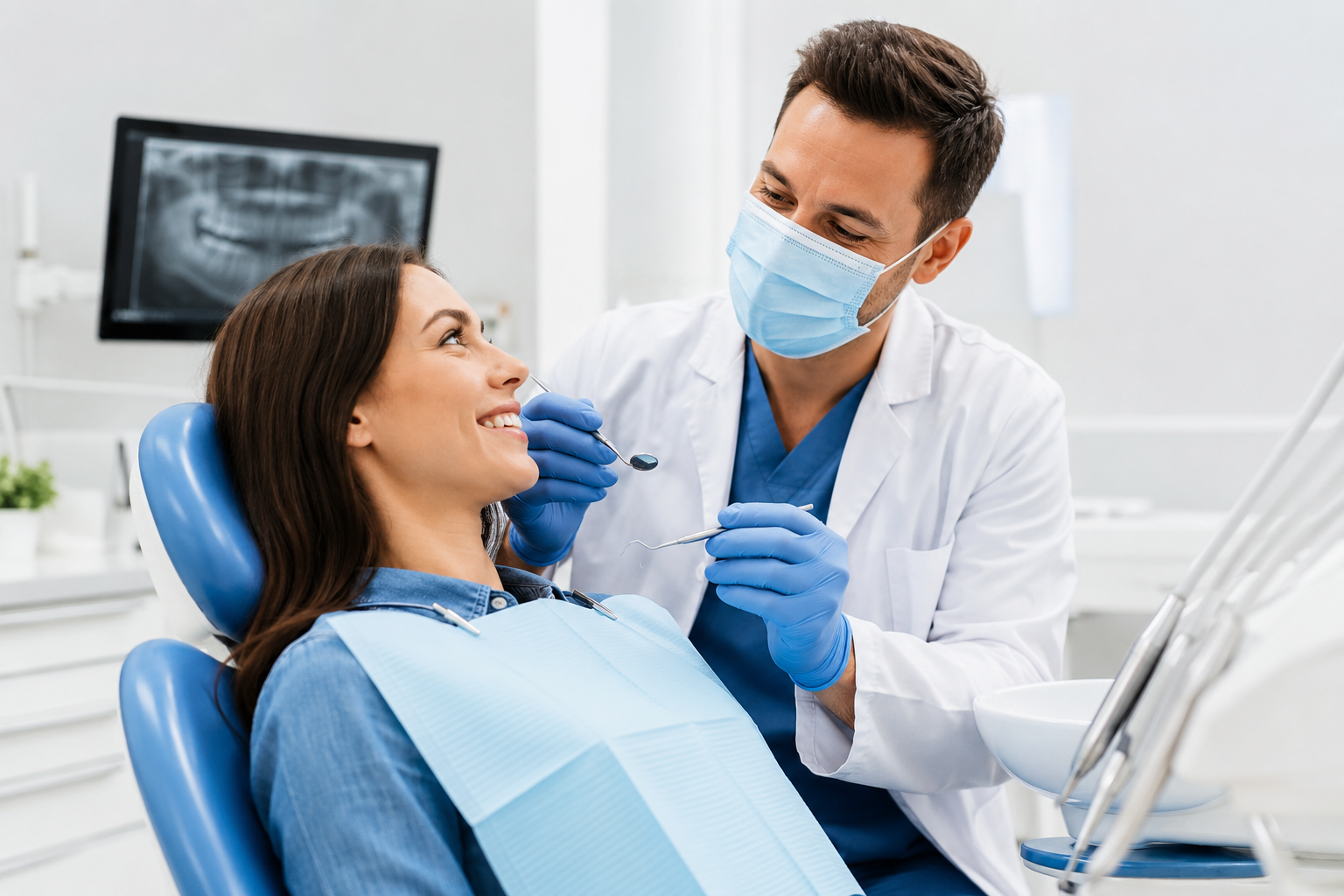
Implant dentures are full-arch replacement teeth that receive support from dental implants rather than resting entirely on the gums. A dental implant is a small post placed in the jawbone. After it becomes stable within the bone, it can help anchor a denture.
This support can reduce the movement commonly associated with traditional dentures. It may also help distribute biting forces more effectively, although chewing ability varies according to the restoration, the number and position of implants, and the patient’s oral health.
The biological connection between an implant and the surrounding bone is known as osseointegration. It is an important part of long-term implant stability, but it is not the same as the early recovery that follows surgery. Patients may feel better before the implant has fully integrated, so they should continue following dietary and care instructions even when discomfort has subsided.
Removable and Fixed Implant Dentures
The phrase “implant dentures” can describe more than one type of restoration. Understanding the basic options makes it easier for patients to discuss their priorities during a consultation.
Removable snap-on dentures
A removable implant denture attaches to implants using small connectors. Many patients call this a “snap-on denture.” It is removed at home for daily cleaning but generally feels more secure during eating and conversation than a traditional denture.
This design may be appealing to someone who wants improved stability while retaining the convenience of a removable appliance. The attachment components can wear over time and may occasionally need replacement or adjustment.
Fixed full-arch teeth
A fixed full-arch restoration attaches securely to dental implants and is not taken out by the patient. It often feels more similar to having teeth that stay in place, but cleaning beneath the restoration requires careful technique and special tools.
Fixed treatment is not automatically the best option for every patient. Available bone, oral hygiene ability, health history, restorative space, and cost all affect the recommendation.
Implant Dentures vs. Traditional Dentures
Traditional dentures rest on the gums and may rely on suction, fit, muscle control, or adhesive for retention. They remain a practical tooth-replacement option for many people and do not require implant surgery.
Implant dentures add support from the jaw. Potential advantages may include:
- Less shifting during speech or meals
- Greater confidence in social situations
- Reduced dependence on denture adhesive
- Improved comfort for some patients
- A stronger sense of stability when biting and chewing
However, implant treatment also involves surgery, healing, ongoing maintenance, and a higher initial investment in many cases. No restoration is maintenance-free, and neither implants nor dentures can be guaranteed to last indefinitely.
Who May Be a Candidate?
Candidacy is determined through an examination rather than age alone. Older adults may qualify for implants, while a younger person may need preliminary care before moving forward.
A dentist generally evaluates:
- The condition of the teeth, gums, and existing dentures
- The amount and quality of available jawbone
- Current or previous gum disease
- Smoking or nicotine use
- Medical conditions and medications that may affect healing
- The patient’s ability to clean around the implants and restoration
- Personal goals, expectations, budget, and comfort with surgery
Some patients who have experienced bone loss may still have treatment options, but additional planning or procedures could be required. A three-dimensional scan can help the clinician assess bone anatomy and nearby structures. Only an individualized evaluation can establish whether treatment is feasible and which approach is safest.
What Does the Treatment Process Involve?
Implant denture treatment occurs in stages. The exact sequence varies based on whether teeth must be removed, whether bone treatment is needed, and whether the planned restoration is removable or fixed.
1. Consultation and planning
The dental team reviews the patient’s health history, concerns, and desired outcome. The evaluation may include an examination, photographs, digital scans, and three-dimensional imaging. This information helps determine implant positions and plan the size, shape, and appearance of the new teeth.
2. Preparatory care
Unhealthy teeth may need to be removed, and active gum or dental infections generally require attention. Some patients may need bone-related procedures, while others can proceed without them.
3. Implant placement
The implants are placed in planned areas of the jaw. Local anesthesia is commonly used, and additional comfort options may be discussed when appropriate. A temporary denture or provisional set of teeth may be available in selected cases, but immediate temporary teeth are not suitable for everyone.
4. Recovery and integration
Early symptom recovery, soft-tissue healing, and osseointegration are separate phases. Initial swelling or tenderness may improve relatively early, while the gum tissue continues healing and the bone-to-implant connection develops over a longer period. The dentist will determine when the implants are stable enough for the next stage rather than relying only on how the mouth feels.
5. Final restoration
After the clinical requirements have been met, the team records the implant positions and designs the final denture. Appointments may be needed to confirm the bite, tooth position, appearance, speech, and comfort. Delivery of the final restoration marks the completion of active treatment, but regular professional maintenance remains important.
Comfort, Recovery, and Possible Risks
Patients often worry about discomfort. The experience varies, but the dental team can explain anesthesia, post-treatment instructions, and appropriate ways to manage expected soreness. Patients should follow instructions about food, hygiene, medication, and activity rather than comparing their recovery with someone else’s.
Implant surgery has potential risks, including infection, delayed healing, injury to nearby structures, implant failure, and inflammation around an implant. Restorative components can also loosen, wear, chip, or require repair. Clinical literature on dental implant complications reinforces the importance of careful planning, health assessment, hygiene, and follow-up care.
Increasing pain, persistent bleeding, fever, drainage, pronounced swelling, numbness that does not improve, or a loose implant component should be reported promptly. Patients with urgent or severe symptoms should seek timely professional care.
How Much Do Implant Dentures Cost?
There is no single fee that applies to every implant denture case. Cost depends on the number and type of implants, imaging, extractions, bone needs, temporary teeth, restoration design, materials, laboratory work, and follow-up requirements.
Patients should ask for a written treatment plan that separates surgical, restorative, and maintenance expenses. It is also helpful to ask what the quoted fee includes, whether insurance may contribute, and whether financing options are available. Choosing treatment based only on an advertised starting price can make it easy to overlook important differences in scope and design.
Caring for Implant Dentures
Implants cannot develop cavities, but the tissues around them can become inflamed. Daily plaque removal and professional maintenance are essential.
Patients with removable implant dentures should clean the denture, attachments, gums, tongue, and implant areas as directed. Fixed restorations may require floss threaders, interdental brushes, or a water flosser to clean beneath the teeth. The dental team can demonstrate which tools fit the individual restoration.
Regular visits allow the clinician to examine the gums, bite, implants, and prosthetic components. Patients should not wait for pain before scheduling care because some problems begin with few noticeable symptoms.
Why Local Experience and Laboratory Support Matter
Implant dentures combine surgical planning, bite design, appearance, and long-term maintenance. Coordinating these details can influence comfort and function.
Jolie Smiles Denture & Implant Studio serves patients in Odessa, FL, under the direction of Dr. Caroline Truong, a board-trained prosthodontist with additional education focused on implants and dentures. The practice also has an in-house dental laboratory, allowing close communication during the design and adjustment of restorations.
The practice offers implant-supported denture consultations for patients who want to understand their options. A consultation does not obligate someone to proceed; it is an opportunity to compare treatments, review findings, and ask questions.
Frequently Asked Questions
Do implant dentures feel like natural teeth?
They are not identical to natural teeth, but implant support can create a more stable feel than a denture resting only on the gums. The experience depends on the restoration type, fit, bite, and number and position of implants.
Can implant dentures be removed?
Some can and some cannot. Snap-on dentures are removed by the patient for cleaning. Fixed full-arch restorations stay in place and are removed only by a dental professional when necessary.
Can someone with bone loss receive implant dentures?
Possibly. The location and extent of bone loss matter. Three-dimensional imaging and a clinical examination help determine whether standard implants, additional procedures, or another treatment approach should be considered.
How long does the entire process take?
The full process varies considerably. Preliminary treatment, soft-tissue healing, osseointegration, and fabrication of the final teeth are different stages. The dentist can provide a personalized sequence after evaluating the patient’s anatomy and treatment needs.
Will implant dentures require replacement?
The denture or its components may eventually need adjustment, repair, relining, or replacement because of wear and changes in the mouth. The implants themselves also require lifelong monitoring. Good home care may support longevity, but it cannot guarantee a specific lifespan.
What if a patient already has dentures?
The dentist can evaluate the existing denture, bone, gums, and bite. In some cases a denture may be modified temporarily, but many implant treatments require a newly designed restoration. The recommendation depends on the condition and design of the current appliance.
Take the Next Step Toward a More Secure Smile
Implant dentures can give appropriate patients a more stable way to replace missing teeth, but successful planning starts with understanding the individual—not selecting a one-size-fits-all package. A thorough consultation should address health, bone structure, comfort, appearance, maintenance, timing, and cost.
Patients considering implant dentures in Odessa, FL, can contact Jolie Smiles Denture & Implant Studio to schedule an evaluation, bring their questions, and explore which tooth-replacement option may fit their needs.