
One-Day Dental Implants in Odessa, FL: What Patients Should Know

Living with missing or failing teeth can affect eating, speaking, and feeling comfortable in social situations. Understandably, many patients want a solution that does not leave them without a smile for an extended period. That is where one-day dental implants may help.
The phrase “one-day dental implants” usually means that dental implants and a temporary replacement tooth or set of teeth may be placed during the same appointment. It does not mean that the jawbone and gums finish healing in one day. It also does not necessarily mean the first restoration will be the final one.
For people researching one day dental implants in Odessa, FL, understanding this distinction can make the consultation and treatment-planning process much easier. Here is what same-day implant care may involve, who might qualify, and what patients can expect afterward.
This article provides general information and is not a diagnosis or individualized treatment recommendation. A dentist or implant clinician must examine the mouth and review the patient’s health history to determine whether same-day treatment is appropriate.
What Are One-Day Dental Implants?
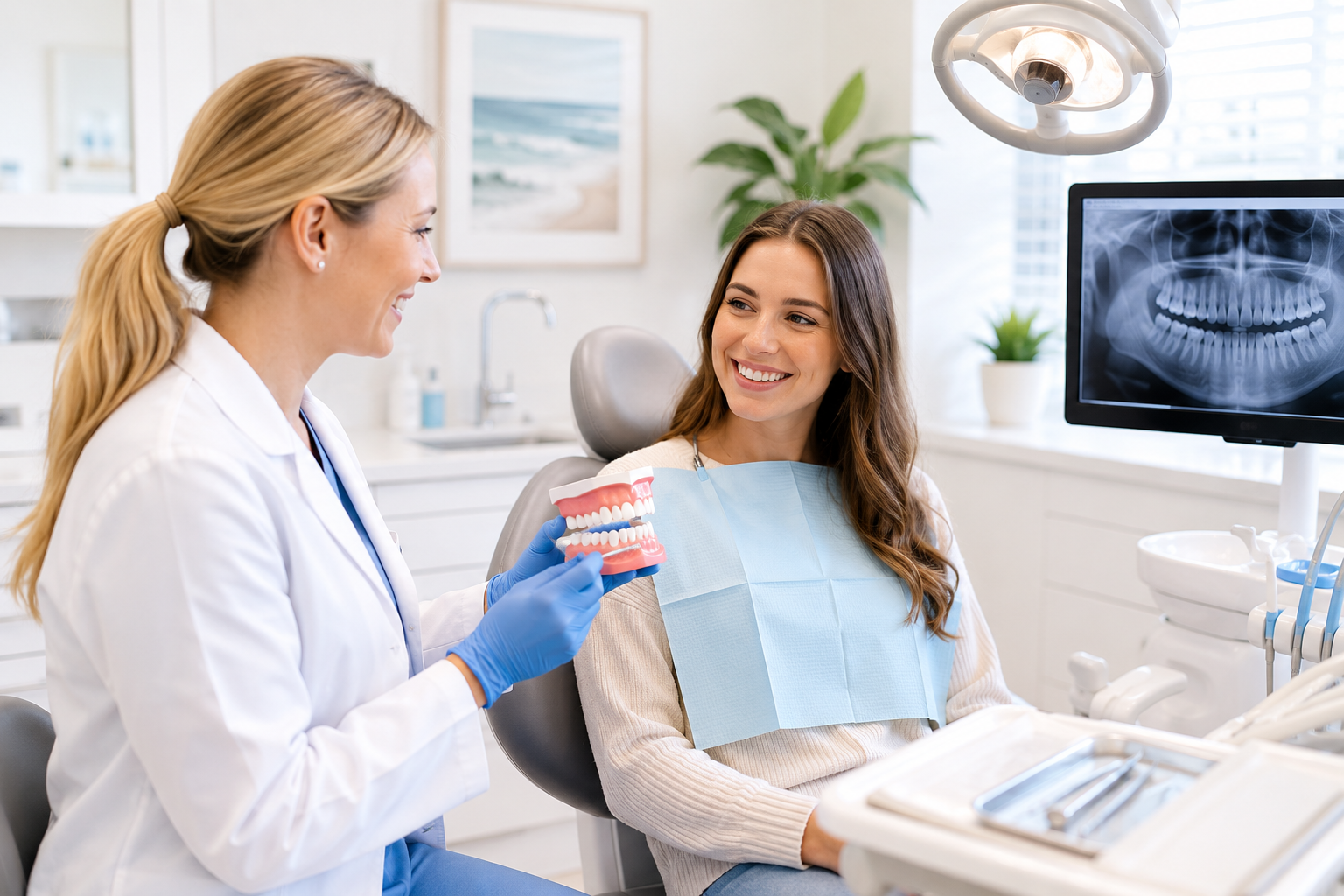
A traditional dental implant is a small post placed in the jaw to support a replacement tooth. One-day treatment—also called same-day implants or immediate loading—may allow the dentist to attach a temporary crown, bridge, or full-arch prosthesis soon after placing one or more implants.
The temporary teeth are designed to help preserve appearance and provide limited function while the implants heal. They may need to stay out of heavy chewing contact, depending on the treatment plan. After healing and evaluation, the temporary restoration may be replaced with a final restoration designed for long-term appearance, fit, and function.
Same-day treatment can be used in different situations, including:
- Replacing an individual missing or non-restorable tooth
- Replacing several teeth with an implant-supported bridge
- Stabilizing or replacing a removable denture
- Restoring a complete upper or lower arch with fixed temporary teeth
Not every patient or missing tooth is suitable for immediate placement or immediate loading. The treatment plan depends on bone support, implant stability, bite forces, gum health, medical history, and the location of the missing teeth.
“Teeth in a Day” Does Not Mean Healing in a Day
Dental implant treatment includes several separate milestones. Understanding them helps patients set realistic expectations.
Early symptom recovery
After implant surgery, it is common to experience some tenderness, swelling, bruising, or minor bleeding. The dental team provides individualized instructions for managing discomfort, eating, cleaning the mouth, and knowing when to call the office. Symptoms should be monitored rather than ignored, especially if they become worse instead of gradually improving.
Soft-tissue healing
The gums also need time to heal around the surgical area and temporary teeth. During this phase, careful oral hygiene and follow-up visits help the team monitor the tissue and make adjustments when needed.
Osseointegration
Osseointegration is the biological process through which the jawbone forms a stable connection with the implant surface. This happens below the gums and continues after early soreness has subsided. Research on implant osseointegration also shows why a patient’s bone health and broader medical history should be considered during planning.
Final restoration
The full treatment is not necessarily complete when temporary teeth are attached. Once the clinician confirms appropriate healing and stability, the final crown, bridge, or full-arch restoration can be planned. That step may involve updated scans, bite records, try-ins, or other refinements.
In short, a patient may leave with temporary teeth on the day of implant placement, but biological healing and completion of the final restoration happen later.
Who May Be a Candidate for Same-Day Implants?
A good candidate generally needs enough healthy bone to support the implant and enough initial stability to protect it during healing. Healthy gum tissue, manageable bite forces, and the ability to follow home-care instructions are also important.
A dentist may evaluate factors such as:
- The number and location of missing or failing teeth
- Jawbone volume and density
- Active gum disease or infection
- Smoking or nicotine use
- Teeth grinding or clenching
- Diabetes control and other medical conditions
- Medications that may affect bone, bleeding, or healing
- The patient’s expectations and ability to follow a modified diet
Having a health condition does not automatically rule out implant care. For example, bone health concerns require an individualized review rather than assumptions. Patients should provide a complete medical history and medication list so their clinician can assess risks and coordinate with another healthcare professional when appropriate.
If immediate loading is not advisable, staged implant treatment may offer a safer or more predictable approach. Waiting for healing is not a treatment failure; it is sometimes the best way to protect the implant and surrounding tissues.
What Happens During the Same-Day Implant Process?
Although every case is different, treatment commonly begins well before the surgical appointment.
1. Consultation and diagnostic records
The dental team examines the teeth and gums, discusses the patient’s goals, and reviews health history. Digital imaging may be used to evaluate available bone and nearby anatomical structures. For extensive treatment, records may also document the bite, facial proportions, and preferred tooth shape and color.
2. Personalized planning
The clinician decides how many implants may be needed, where they should be positioned, and what type of restoration may be appropriate. The plan may include tooth removal, bone management, a temporary restoration, and a strategy for the final teeth.
3. Implant placement
On the procedure day, any planned extractions may be completed before or alongside implant placement. Comfort options are discussed in advance, and local anesthesia is commonly used. The exact sequence depends on the clinical situation.
4. Temporary teeth
If the implants achieve the stability required by the treatment plan, temporary teeth may be attached that day. If stability or another clinical factor is not favorable, the dentist may recommend a different temporary option and allow the implants to heal without immediate loading.
5. Follow-up and final teeth
Follow-up visits allow the team to check healing, implant stability, oral hygiene, comfort, and bite. After the healing process has been evaluated, the final restoration can be designed and placed.
Comfort, Recovery, and Eating After Treatment
Many patients feel nervous about dental implant surgery. Asking questions beforehand can make the experience feel more manageable. Patients may want to discuss anesthesia, sedation options, expected sensations, prescriptions, transportation, and after-hours contact instructions.
After treatment, the dentist may recommend softer foods and advise patients to avoid placing excessive chewing pressure on temporary teeth. A temporary restoration may look like teeth, but it should not automatically be treated like fully healed natural teeth. Following dietary instructions can help protect the implants during osseointegration.
Patients should also follow the provided brushing, rinsing, and cleaning instructions. Long-term implant care involves professional checkups and consistent home hygiene because the tissues around implants can still develop inflammation.
Dental implant surgery has potential risks, including infection, inflammation around an implant, nerve injury, sinus-related complications, prosthetic problems, or loss of implant integration. An authoritative review of implant-surgery complications emphasizes the importance of careful assessment, technique, and monitoring. Patients should contact their dental office promptly about severe or increasing pain, persistent bleeding, fever, drainage, significant swelling, numbness that concerns them, or a loose implant restoration.
How an In-House Dental Lab Can Support Same-Day Care
Same-day treatment requires coordination between surgical planning and restoration design. According to its in-house dental lab information, Jolie Smiles can design, fabricate, and adjust certain implant and denture restorations within the practice rather than relying entirely on an outside vendor.
This setup may help streamline communication and make some adjustments more convenient. It does not mean every patient will receive a final restoration in one visit. Treatment timing still depends on the condition of the mouth, the planned restoration, implant stability, and healing.
Jolie Smiles is a prosthodontist-led implant and denture studio serving Odessa, FL, as described on the practice website. Prosthodontics focuses on restoring and replacing teeth, including planning crowns, bridges, dentures, and implant-supported restorations.
Questions to Ask During an Implant Consultation
A consultation is an opportunity to compare options rather than commit immediately. Helpful questions include:
- Does “same day” mean temporary teeth or final teeth in this case?
- Is there enough bone for implant placement?
- Would any extractions or bone procedures be needed?
- What happens if an implant is not stable enough for same-day teeth?
- What foods and activities should be avoided during healing?
- How will temporary teeth differ from the final restoration?
- What is included in the proposed fee?
- How many follow-up appointments may be involved?
- What maintenance will the restoration require?
- What alternatives should be considered?
Patients should receive a written plan that clearly explains the proposed treatment, alternatives, likely sequence, fees, and important risks. Because every mouth is different, online price estimates and another patient’s experience may not reflect an individual case.
Frequently Asked Questions
Can a patient really receive dental implants and teeth in one day?
In selected cases, implants and temporary teeth can be placed on the same day. The dentist must confirm that the implants have suitable stability and that immediate loading is appropriate. Final teeth are often completed after healing and reassessment.
Are one-day dental implants painful?
The procedure is performed with appropriate anesthesia, but soreness, swelling, or tenderness may occur afterward. Comfort needs vary. The dental team can explain pain-management and sedation options based on the patient’s health and planned treatment.
What if there is not enough jawbone?
Low bone volume does not always eliminate implant options, but it can change the plan. The dentist may discuss bone grafting, alternative implant positions, a different implant design, staged care, or a non-implant restoration. Imaging and an examination are needed before making that decision.
Can failing teeth be removed and replaced during the same visit?
Sometimes an implant can be placed immediately after an extraction, and a temporary tooth may also be possible. Infection, bone condition, gum shape, implant stability, and bite pressure all influence whether this approach is appropriate.
Are same-day implants permanent?
The implant is intended as a long-term tooth-replacement foundation, but no dental treatment can be guaranteed for life. The first teeth attached on surgery day may be temporary. Long-term outcomes depend on healing, hygiene, maintenance, health factors, and protection from excessive bite forces.
How much do one-day dental implants cost in Odessa, FL?
Cost varies according to the number of implants, type of restoration, diagnostic records, extractions, bone needs, temporary teeth, and final prosthesis. An examination is necessary for an accurate written estimate. Patients should ask which surgical, restorative, laboratory, and follow-up services are included.
Explore One-Day Dental Implants in Odessa, FL
Same-day implant treatment can shorten the time a suitable patient spends without teeth, but the word “same-day” should not create unrealistic expectations. Temporary teeth, early recovery, gum healing, osseointegration, and delivery of the final restoration are separate parts of the process.
Patients considering one-day dental implants in Odessa, FL, can contact Jolie Smiles to schedule a consultation, ask questions, and receive a plan based on their oral health and goals. A careful evaluation is the best first step toward deciding whether immediate implant treatment—or another tooth-replacement option—fits their needs.